

The Arab Gulf states are producing billionaires faster than ever before. New faces have emerged on the Gulf wealth scene, some of them young people who have made their fortunes in smartphone apps, artificial intelligence platforms, fast-food chains, and even video games.
The prospect of seeing a multi-generational wealth chain seems greater with the adoption of policies that are more attractive to international family offices and venture capital, promising a surge in the number of "unicorn" companies.
Saudi Investment Minister Khalid Al-Falih said during a panel discussion at the Future Investment Initiative conference recently held in Riyadh: "The family represents the nucleus of society according to our culture and values, and it has been the source of wealth for thousands of years. The economy has been built on a group of wealthy families." Al-Falih added: "Most of the largest companies were built by large families, most of whom were traders who built companies, and some of them are participating in the Future Investment Initiative conference.”
In recent years, the Gulf States have witnessed a radical shift in the sources of wealth creation. Black gold (oil) is no longer the sole engine of the economy. New names are emerging on the lists of the wealthiest, having amassed their fortunes from non-oil sectors such as financial technology (fintech), digital entertainment, artificial intelligence, and healthcare.
Startups are transforming into multi-billion-dollar regional brands
Companies like Tabby and Talabat are no longer just startups; they have become multi-billion-dollar regional brands led by entrepreneurs who built their wealth on innovative ideas, not oil wells.
Among the examples of these successful young initiatives is Hossam Arab, founder of Tabby, whose company operates in the installment sector in an innovative and Sharia-compliant manner. Founded in 2019, the company is now valued at USD4.5 billion, serves more than 15 million users in the Gulf region, and is preparing for an initial public offering (IPO), according to Bloomberg.
In the food sector, the story of Talabat shines. It began as a small Kuwaiti project in 2004 and has transformed into a massive regional platform operating in nine countries, generating quarterly profits exceeding USD121 million. Its founders, the Kuwaiti Abdulaziz Al-Loghani and the Saudi Khaled Al-Otaibi did not inherit their wealth; they built it from scratch through their deep understanding of the local market and its digital needs.
In the entertainment world, TechCrunch reported that the Saudi company True Gamers raised $45 million to expand its operations in the electronic games sector, capitalizing on significant government support for the digital entertainment industry and the desire of Gulf youth for local content.
Competing globally
These names and others represent a new facet of wealth in the Gulf, that is wealth not extracted from the earth, but built in minds, designed on screens, and financed through venture capital. These innovative ideas have attracted massive investments from global companies like PayPal Ventures and Sequoia Capital, among other venture capital giants, and ideas are now being exported from the Gulf to the world, much like oil.
This transformation is reflected not only in individual success stories but is also confirmed by official figures. The contribution of oil activities to the GDP of the Gulf Cooperation Council (GCC) countries has fallen to less than 27 percent, compared to more than 73 percent for non-oil activities, according to GCC data. Startup valuations, funding rounds, initial public offerings (IPOs), and new technologies in artificial intelligence and their applications have become major topics of discussion at meeting tables and in cafes in the Gulf's financial capitals.
New names are emerging in Gulf wealth. They are a new generation of entrepreneurs who have built their fortunes on digital ideas, smart platforms, and food and entertainment innovations. This growth is reinforced by the GCC countries' efforts to facilitate the investment environment, the transfer of capital, ideas, and innovation across borders, and to attract global capital and talent.
Al-Falih stated: "We are working to facilitate the attraction of multinational companies to operate within the region, as well as family offices. The goal is not money (which is also important), but primarily ideas and innovation." He revealed that Saudi Arabia has successfully attracted 700 global companies to establish their regional headquarters in the Kingdom, some of which are among the world's largest in their respective sectors.
AI hosting centre
Gulf governments haven't stopped there. Local economies are intensifying their massive investments in leading and future-oriented technologies. Saudi Arabia plans to become the third-largest investor in artificial intelligence with the launch of the giant company Humanine, which will build new technologies and massive data centers.
The UAE is also striving to build giant data centres to host data processing operations and has received approval to purchase advanced Nvidia chips, promising more knowledge exports in the future, amidst the Gulf's adoption of policies aimed at diversifying the economy away from oil.
Gulf governments' support for e-commerce has created a large number of successful platforms, and a new generation of young people have seized the opportunity, reshaping technology. To align with the trends of the new generation of consumers, Talabat and Souq.com were formed, both of which have been acquired by Amazon.
One of the most prominent features of this transformation is the significant transfer of wealth between generations. Estimates indicate that between $500 and $700 billion of Gulf wealth will be transferred to the next generation by 2035.
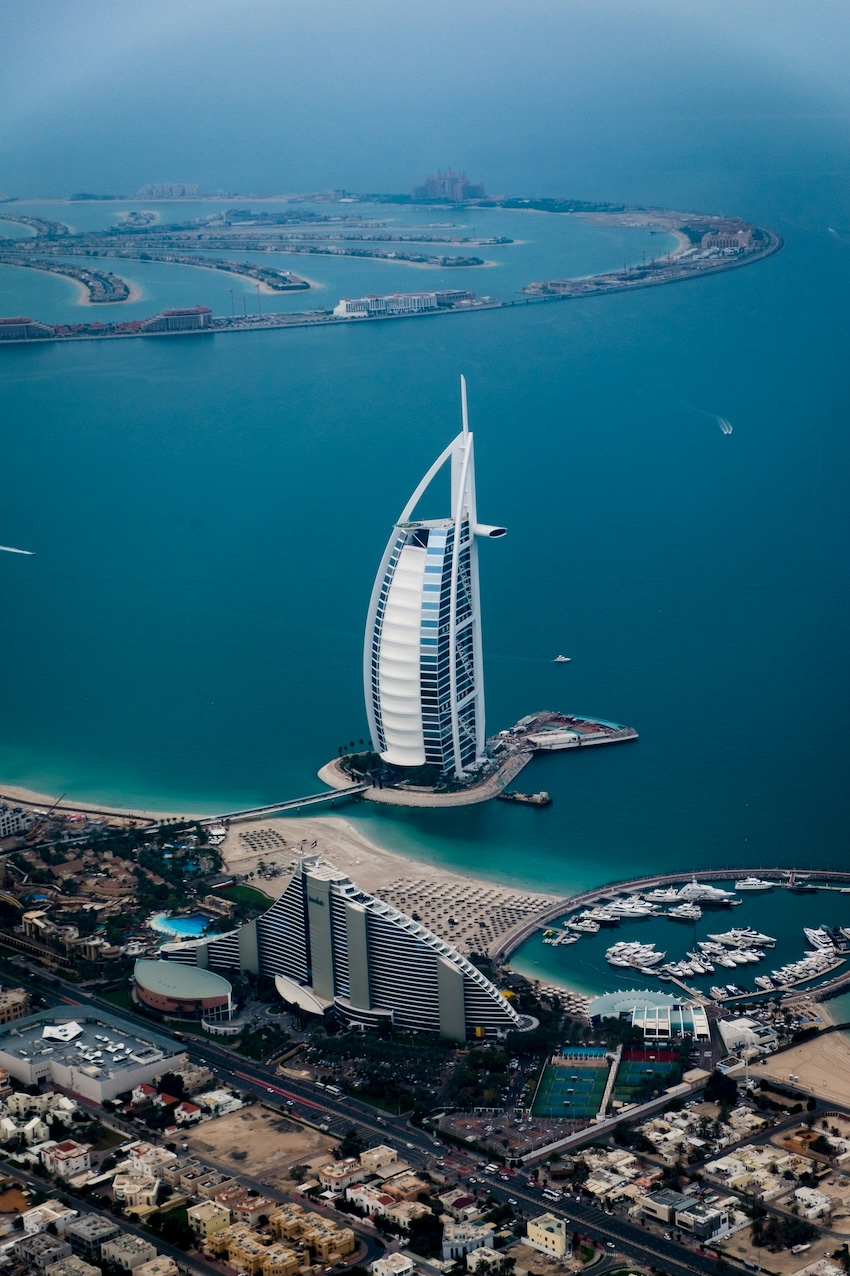
Photo: The UAE is one of the Arab Gulf states which is seeing a rise in the number of billionaires. - by Christoper Shulz